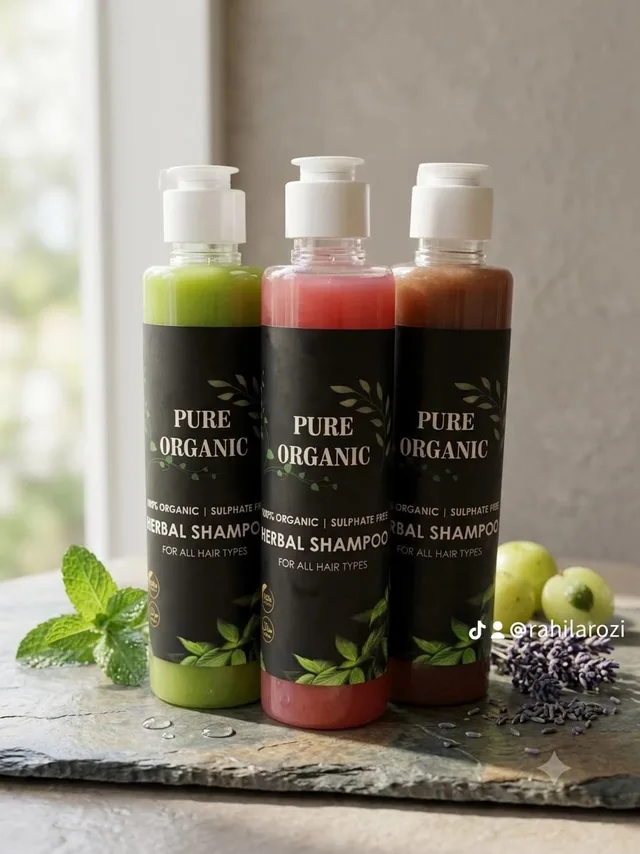
Pure Organic Herbal Shampoo
Rs. 1,300

Start typing to search products...
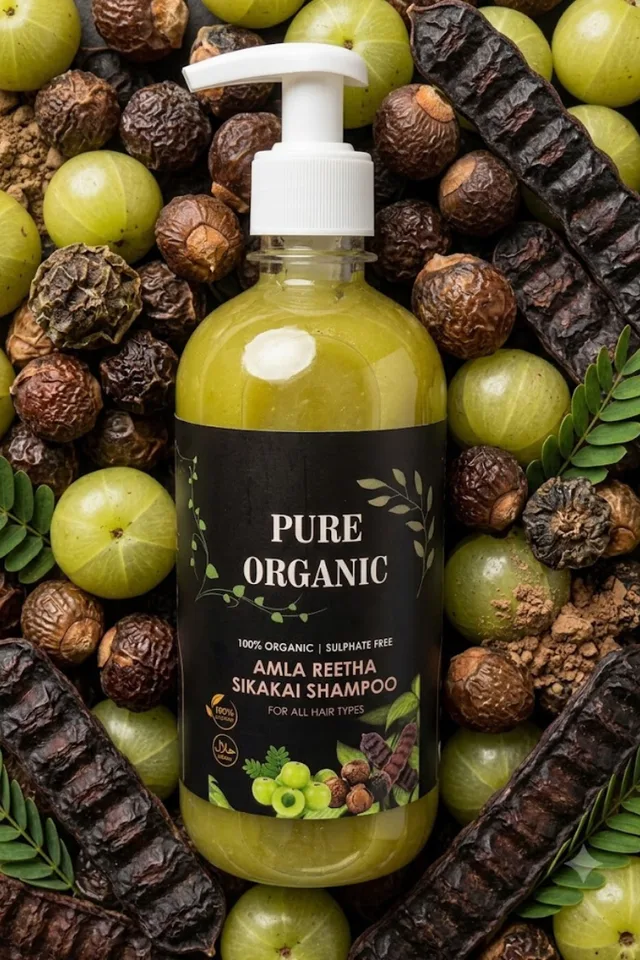
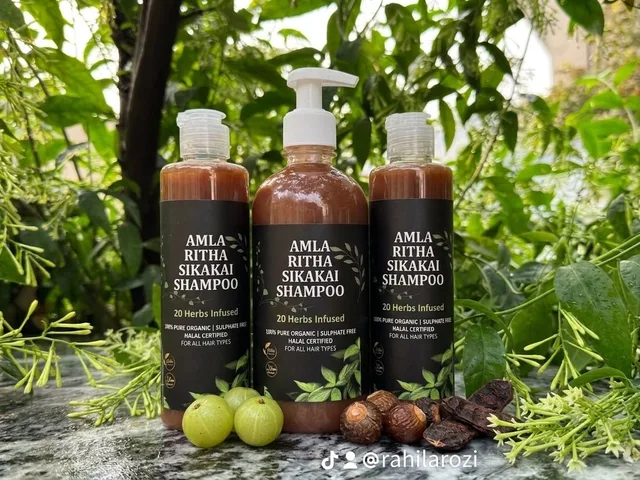
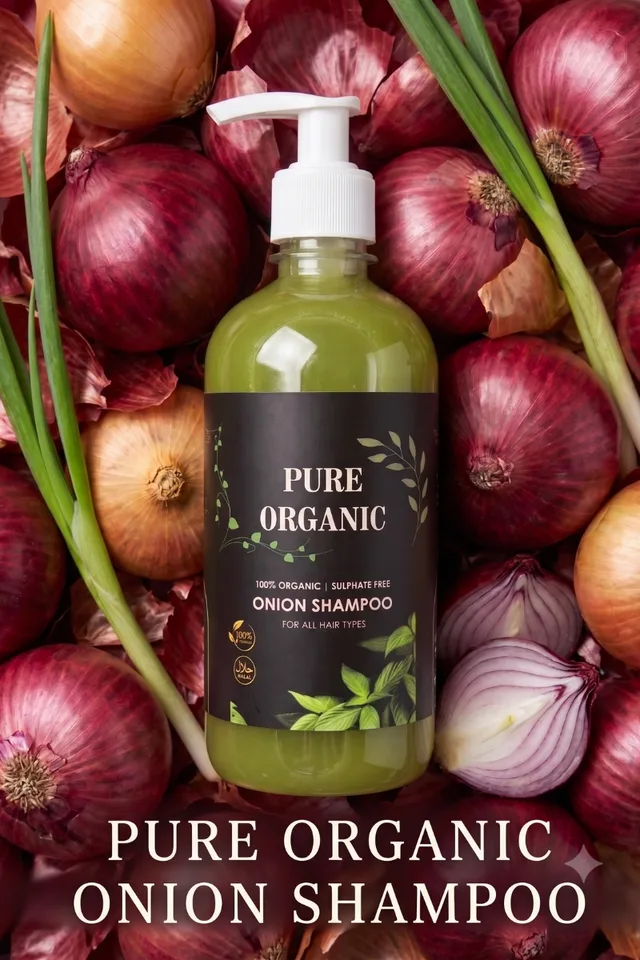
Four sulphate-free formulas built on amla, reetha, shikakai, onion and aloe vera — cooked by hand in small batches and formulated for Pakistani hard water. Onion for hair fall, Amla Reetha for dandruff and buildup, Aloe Vera for sensitive scalps, Herbal for everything in between.
Rs. 1,300
Rs. 1,300
Rs. 1,300
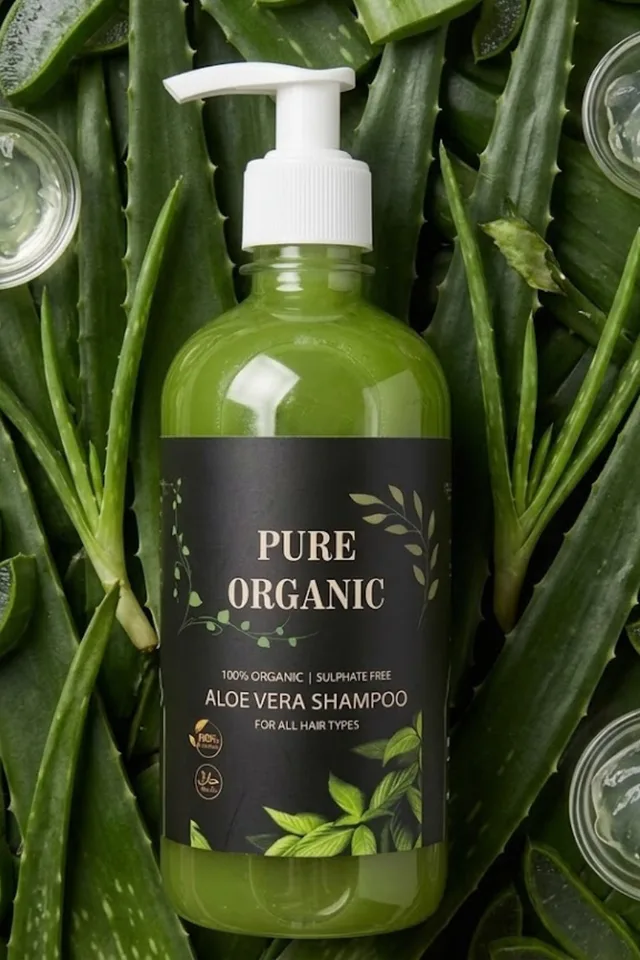
Rs. 1,300
Organic shampoo is a hair cleanser built on plant-derived surfactants and certified organic botanical extracts instead of sulfates, parabens, silicones and synthetic fragrance. It removes oil, dust and product buildup while leaving the scalp’s natural sebum layer intact. Pure Organic formulates every shampoo in this range for Pakistani conditions — hard water, high dust load, and heat that pushes the scalp to over-produce oil.
Explore the listed ingredients, available sizes and prices on each product page. Contact us if you need further formulation details.
A shampoo qualifies as organic when its cleansing agents and active botanicals come from certified organically grown plants, and when the formula excludes petroleum-derived surfactants, synthetic preservatives and artificial fragrance. The label alone means nothing in Pakistan — there is no local enforcement body — so the ingredient list is the only reliable check.
These four terms are used interchangeably in the Pakistani market. They are not the same thing.
| Term | What it actually means | Regulated? |
|---|---|---|
| Organic | Botanicals grown without synthetic pesticides or fertilisers; no sulfates, parabens or synthetic fragrance in the formula | Not in Pakistan — verify by ingredient list |
| Natural | Contains some plant-derived ingredients; may still contain SLS, parabens and silicones | No |
| Herbal | Contains herb extracts; often added to an otherwise conventional base | No |
| Sulfate-free | Excludes SLS and SLES only; says nothing about parabens, silicones or origin | No |
How to verify a shampoo before you buy it:
Most Pakistani households run on hard water with high calcium and magnesium content. Hard water reacts with sulfate surfactants to leave a mineral film on the hair shaft, which is why hair feels rough and dull even straight after a wash. Glucoside-based organic surfactants produce less of this residue.
Three further local factors matter:
| Product | Best for | Key actives | Sizes | Price |
|---|---|---|---|---|
| Pure Organic Herbal Shampoo | Dry, frizzy hair; all-rounder | Amla Extract, Shikakai Extract, Reetha Extract | 250 ml, 500 ml, 1 kg | Rs. 1,300 |
| Pure Organic Amla Reetha Shampoo | Dandruff, buildup, dullness | Amla, reetha, shikakai | 250 ml, 500 ml, 1 kg | Rs. 1,300 |
| Pure Organic Onion Shampoo | Hair fall, thinning | Onion seed | 250 ml, 500 ml, 1 kg | Rs. 1,300 |
| Pure Organic Aloe Vera Shampoo | Itchy, sensitive scalp | Aloe vera | 250 ml, 500 ml, 1 kg | Rs. 1,300 |
Deep Nourishment for Every Hair Type.
View Pure Organic Herbal Shampoo
20 Herbs Infused for Stronger Hair.
View Pure Organic Amla Reetha Shampoo
Fight Hair Fall with the Power of Onion.
View Pure Organic Onion Shampoo
Gentle Cleansing with Aloe Vera Goodness.
View Pure Organic Aloe Vera Shampoo
Match the formula to your scalp condition first and your hair texture second. The scalp determines wash frequency; the hair shaft determines which conditioning agents you need.
| Hair type | Scalp condition | Choose | Key ingredient to look for | Wash frequency |
|---|---|---|---|---|
| Fine, limp | Oily | Amla Reetha Shampoo | Reetha, shikakai | Every 2 days |
| Thick, coarse | Normal to dry | Herbal Shampoo | Herbal blend | 2× per week |
| Curly, frizzy | Dry | Herbal Shampoo | Herbal blend | 1–2× per week |
| Thinning, shedding | Any | Onion Shampoo | Onion seed | 2–3× per week |
| Flaky, itchy | Dandruff-prone | Amla Reetha Shampoo | Amla, reetha, neem | 3× per week |
| Colour-treated | Dry, sensitised | Amla Reetha Shampoo | Amla, shikakai | 1–2× per week |
| Sensitive, irritated | Reactive | Aloe Vera Shampoo | Aloe vera | 2–3× per week |
| Ingredient | Function | Best for | Evidence strength |
|---|---|---|---|
| Onion seed oil | Sulfur-rich; supports keratin formation, improves scalp circulation | Shedding, thinning | Limited clinical data; some small studies on alopecia areata |
| Argan oil | Fatty acids and vitamin E; smooths cuticle, reduces protein loss | Dry, frizzy, damaged hair | Moderate |
| Tea tree oil | Antifungal against Malassezia, the yeast linked to dandruff | Flaky, itchy scalp | Moderate |
| Amla | Vitamin C and tannins; strengthens the shaft, adds shine | Dull, weak hair | Traditional use, limited trials |
| Reetha (soapnut) | Natural saponin cleanser; gentle surfactant | Oily scalp, sensitive skin | Traditional use |
| Shikakai | Mild cleanser with a naturally low pH; conditions while cleaning | All types, especially colour-treated | Traditional use |
| Aloe vera | Humectant; hydrates and soothes irritation | Dry or irritated scalp | Moderate |
| Rosemary extract | Improves scalp microcirculation | Thinning hair | One notable trial vs. minoxidil 2% |
| Biotin | B7 vitamin; topical benefit is modest, dietary intake matters more | Brittle hair | Weak topically |
| Hibiscus | Amino acids and mucilage; adds slip and shine | Frizz, dryness | Traditional use |
| Neem | Antibacterial and antifungal | Scalp infections, dandruff | Moderate |
| Kalonji (black seed) | Anti-inflammatory; thymoquinone content | Inflamed scalp | Emerging |
| Bhringraj | Traditional Ayurvedic hair tonic; scalp conditioning | Thinning, premature greying | Traditional use |
| Fenugreek (methi) | Mucilage and proteins; adds slip, soothes scalp | Dryness, dandruff | Traditional use |
| Flaxseed | Gel-forming polysaccharides; improves curl definition | Wavy and curly hair | Traditional use |
| Moringa | Vitamins and antioxidants; scalp nourishment | Dull, weak hair | Limited |
| Caffeine | Stimulates follicles in lab studies; needs contact time | Thinning hair | Emerging; leave-in beats rinse-off |
| Lemongrass | Astringent and antimicrobial; cuts excess oil | Oily scalp, flakes | Traditional use |
| Keratin | Protein that fills gaps in a damaged cuticle | Chemically treated hair | Moderate |
We list evidence strength because most organic shampoo pages in Pakistan do not. Onion shampoo will not regrow hair lost to androgenetic alopecia, and any brand claiming it will is selling you something.
Switching from a sulfate shampoo triggers a short adjustment period. This is the single most common reason people abandon organic shampoo, and it is entirely predictable.
| Week | What you’ll notice | Why |
|---|---|---|
| 1 | Less lather, hair feels heavier or waxier | Your scalp is still over-producing oil in response to years of stripping |
| 2 | Oiliness peaks, then starts settling | Sebum production begins recalibrating |
| 3 | Hair feels lighter, scalp less itchy | Barrier function recovering |
| 4 | Texture stabilises; shine returns | Adjustment complete |
| 8–12 | Reduced breakage becomes visible | Full growth-cycle response time |
If the scalp is still greasy after four weeks, you are washing too infrequently for your scalp type — increase to every second day rather than switching back.
Organic and herbal shampoo in Pakistan currently sells between roughly PKR 440 and PKR 1,450 per bottle. Price is driven by the surfactant base and the concentration of active botanicals, not by packaging.
| Segment | Typical price | What you generally get |
|---|---|---|
| Budget | PKR 440–600 | Herbal extracts added to a conventional base; often still contains sulfates |
| Mid | PKR 600–1,000 | Sulfate-free base, named botanicals, smaller bottle sizes |
| Premium | PKR 1,000–1,500 | Glucoside surfactants, higher active concentration, full ingredient disclosure |
Every Pure Organic shampoo starts at Rs. 1,300 and comes in three sizes.
| Size | Price | Best for |
|---|---|---|
| 250 ml | Rs. 1,300 | First-time buyers testing a formula |
| 500 ml | Rs. 2,800 | Regular single-person use |
| 1 kg | Rs. 4,000 | Households, long hair, best value per ml |
Delivery: Nationwide across Pakistan in 3–5 business days. Next-day delivery in Karachi, Lahore and Islamabad. Free shipping above Rs. 2,000, flat Rs. 300 below that. 10-day money-back guarantee. Cash on delivery is available.
| Situation | Safe? | What to know |
|---|---|---|
| Colour-treated hair | Yes | Sulfate-free formulas extend colour life; avoid clarifying types in the first 72 hours after colouring |
| Pregnancy | Generally yes | Avoid high-concentration essential oils; check with your doctor if you have a specific concern |
| Children under 5 | Case by case | Use a formula without tea tree oil; children’s skin absorbs essential oils more readily |
| Sensitive or eczema-prone scalp | Usually | Patch test behind the ear, wait 24 hours |
| Keratin-treated hair | Yes | Sulfate-free is specifically recommended after keratin treatment |
| Active scalp infection | See a doctor first | Shampoo is not a treatment for a diagnosed infection |
Patch test any new shampoo if you have had a reaction to a hair product before. Apply a small amount behind the ear, leave 24 hours, and check for redness.
Got Questions?
Everything you need to know about our organic products, ingredients, and how they work for your hair and skin.
Organic shampoo reduces breakage caused by harsh surfactants and improves scalp condition, which supports the hair you have. It does not reverse hormonal hair loss, thyroid-related shedding or iron-deficiency shedding. Losing 50–100 hairs a day is normal. If you are shedding noticeably more than that for longer than three months, the cause is usually internal and worth a doctor's visit — no shampoo will address it.
Lather comes from sulfates, not from cleaning power. Plant-derived glucoside surfactants clean effectively but foam less. Pre-lathering in your palms and washing twice after oiling gives you the same result.
Two to three times per week suits most people in Pakistan. Oily scalps in Karachi's humidity may need every second day. Dry or curly hair does better at once or twice weekly.
Better than sulfate shampoo, yes. Glucoside surfactants leave less mineral residue. If your water is very hard, a monthly rinse with diluted apple cider vinegar removes any remaining buildup.
A tea tree or neem formula helps with mild to moderate dandruff caused by Malassezia overgrowth. Severe or persistent dandruff, or dandruff with painful patches, needs a dermatologist.
Scalp comfort improves within two to three weeks. Reduced breakage becomes visible at eight to twelve weeks, because that is how long it takes for new growth to show.
You can, but most people don't need to. Daily washing keeps the scalp in a constant cycle of stripping and rebound oil production, even with a gentle formula.
12 months after opening. Organic formulas use plant-based preservatives with a shorter effective life than synthetic ones. Store away from direct sunlight.